State v. John Mann | NC pedia In 1829, a North Carolina man named John Mann hired an enslaved woman named Lydia from her legal owner, Elizabeth Jones. After Lydia committed what was described as a minor offense, Mann tried to punish her by whipping her. Lydia ran away, and Mann responded by shooting her.
State v. Mann
A recap of our Trial/EOTO debate
For our first Trial/EOTO debate, Milo and I took on one of the most notorious cases in American legal history: State v. Mann (North Carolina, 1829–1830). It's a surprisingly short case, but the issues it raises are enormous. What made this debate so challenging was that it forced us to separate what the law recognized at the time from what we know was deeply immoral. That tension sat at the center of every argument we made. A jury found him guilty and fined him just five dollars. The key issue was that Mann wasn't Lydia's legal owner—he had only hired her.
Milo's argument (defending Mann's position)
Milo argued the case from Mann's perspective, focusing on the law as it existed in the early 1800s rather than on modern moral standards. His argument was that, under the legal system of the time, enslaved people were treated as property. Because of that, anyone who legally possessed an enslaved person—even temporarily through a hiring agreement—needed complete authority to enforce obedience.
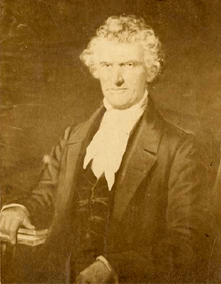
His point was that if a hired enslaved person could ignore or resist punishment simply because the person giving the order wasn't their legal owner, then the entire practice of hiring enslaved labor would break down. From that legal perspective, the authority of the hirer had to be just as absolute as the authority of the owner. It was a harsh argument, but it reflected the reasoning that Justice Thomas Ruffin ultimately adopted in the North Carolina Supreme
State v. Mann (A-94) | NC DNCR
My argument
I argued in favor of the jury's original decision to convict Mann. My position was that his response was completely out of proportion to what Lydia had done. Whatever the alleged offense was, shooting someone who was trying to run away went far beyond discipline—it was an act of violence. Even under the laws of the time, I argued that assault and battery statutes existed to place some limits on excessive force, regardless of the victim's legal status.
I also pointed to State v. Hall, a North Carolina case that the Attorney General cited during the appeal. That case showed that courts had already recognized at least some legal protection for enslaved people when they were harmed by others. Building on that precedent, I argued that holding Mann criminally responsible wasn't some radical break from existing law. It was a reasonable extension of legal principles that were already there—and, more importantly, the only outcome that came close to justice.
The Supreme Court's decision
The North Carolina Supreme Court ultimately sided with Mann. In his 1830 opinion, Justice Thomas Ruffin overturned the conviction, writing that "the power of the master must be absolute, to render the submission of the slave perfect." Ruffin acknowledged that he found the case deeply troubling and even admitted that he would have "gladly have avoided this ungrateful question." Even so, he concluded that the law, as he understood it, left no room to uphold Mann's conviction or protect Lydia.
Why the case still matters
State v. Mann remains one of the most studied cases in American legal history because it exposes the brutal reality of slavery more clearly than almost any other opinion. Ruffin didn't try to soften what the law required—he openly admitted that slavery depended on giving one person nearly unlimited power over another. That honesty is one reason abolitionists later pointed to the case as evidence that slavery itself was incompatible with justice.
Looking back, debating this case wasn't really about winning an argument against Milo. It was about confronting an uncomfortable truth: a court can faithfully apply the law and still reach a result that is profoundly unjust. State v. Mann is a powerful reminder that legality and justice are not always the same thing, and that history often turns on whether courts choose to reinforce an unjust system or challenge it.